Organizational Leadership in Oil and Gas Industry Course
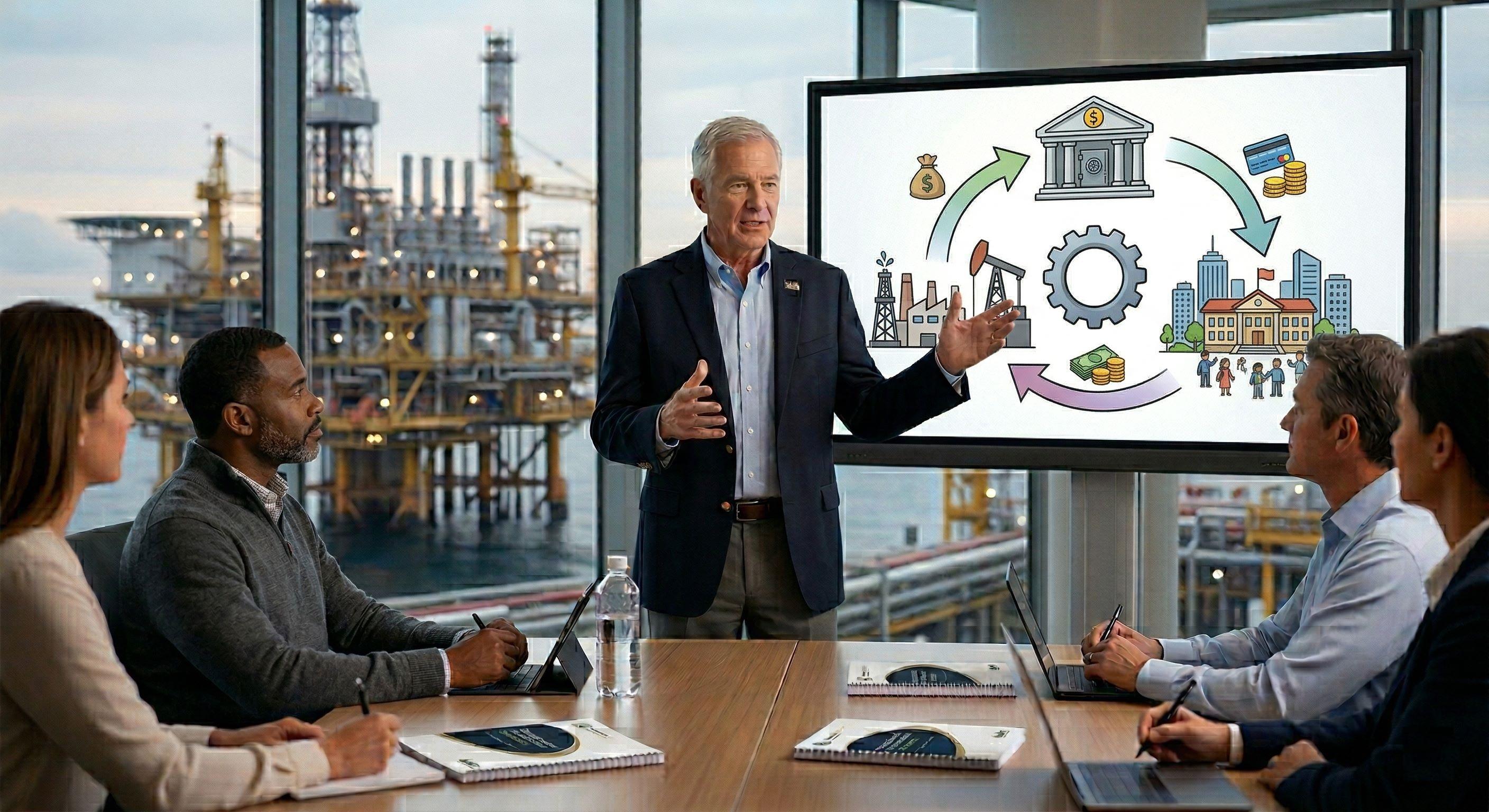
This course is designed to equip petroleum industry professionals with the leadership and strategic skills necessary to navigate the complexities of the modern energy sector.
Day-1 Key Learning Subjects:
Understanding the Oil & Gas Value Chain and Complexity: The course emphasizes the integrated nature of the industry—spanning Upstream (exploration and production), Midstream (transportation), and Downstream (refining and marketing). A key takeaway is how leaders must manage operational synergies across these sectors to ensure resilience against market shocks and optimize cost and risk management.
Distinction Between Management and Leadership: Participants learn that while management focuses on administrative tasks, leadership is the "beating heart" of an organization. It is defined as the strategic process of inspiring, influencing, and motivating others to work with high commitment without coercion, specifically to extract hidden energies within individuals to achieve collective goals.
Core Leadership Traits and Styles in the Energy Sector: The curriculum identifies specific traits required for success in the industry, including visionary thinking, adaptability, and ethical integrity. It covers various leadership styles tailored to the unique demands of the field, highlighting the importance of clear communication and the ability to pivot between "Field Leadership" and "Office Leadership" contexts.
Building High-Performance and Multicultural Teams: A major focus is placed on the human element of the industry. Leaders are taught strategies for building high-performance teams through delegation and empowerment, while also navigating the complexities of leading in multinational and multicultural contexts—essential for the global nature of modern petroleum operations.
Day-2 Key Learning Subjects:
Strategic Foresight and Vision Alignment: Leaders are taught to anticipate long-term global energy trends (such as the shift toward LNG and renewables) and align their team's mission and values with the broader organizational strategy. A core focus is ensuring "Value Alignment," where safety culture and operational integrity become shared principles that guide every decision.
Risk-Based Leadership and Safety Culture: In a high-stakes industry, leadership involves the proactive identification and management of HSE (Health, Safety, and Environment), operational, and reputational risks. The course emphasizes making informed, safety-prioritized decisions, illustrated through practical scenarios like emergency evacuation planning and execution.
Leading Innovation and Technological Change: As the industry undergoes digital transformation, leaders must drive a culture that embraces new technologies like AI and automation. This point highlights the leader's role in balancing technical risk-taking with operational safety and managing the human side of "resistance to change" during tech adoption.
Interpersonal Excellence (Coaching, Conflict, and Performance): Effective leadership in the energy sector requires mastering "soft" skills to manage "hard" assets. This includes utilizing conflict management and negotiation techniques, implementing performance management systems, and committing to coaching and mentoring to develop a future-ready workforce.
What you'll learn
- Oil and Gas Leadership
- Oil and Gas Soft Skills
- Oil and Gas Teams Management
- Oil and Gas Business Management